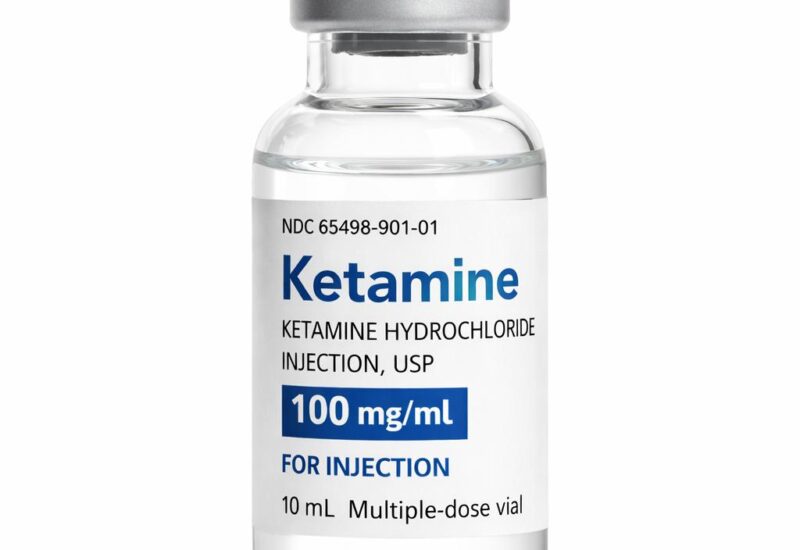
Ketamine Infusion Pump
Ketamine Infusion Pump: How It Works, Clinical Benefits, Safety Features, and Medical Applications
Introduction: Why Is a Ketamine Infusion Pump Important?
A ketamine infusion pump is a medical device that allows trained healthcare professionals to administer ketamine intravenously at a controlled rate. By regulating the movement of medication into a patient’s bloodstream, the device supports carefully managed treatment protocols in appropriate clinical settings.
Ketamine has an established role in anaesthesia and has attracted considerable research interest in pain management and mental-health treatment. However, its clinical use requires more than selecting a medication. Healthcare professionals must consider the patient’s medical history, treatment objectives, potential adverse effects, and appropriate monitoring.
An infusion pump helps clinicians manage one important part of this process: controlled medication delivery. This guide explains how the equipment works, why monitoring matters, and how ketamine products contribute to pharmaceutical research.
1. Inside the Equipment: What Makes Up an Infusion Pump?
An infusion pump contains several components that work together to regulate medication delivery.
| Component | Main function |
|---|---|
| Control interface | Allows authorised clinicians to manage prescribed settings |
| Display screen | Shows operating information and alerts |
| Pump mechanism | Controls fluid movement through the administration tubing |
| Medication container | Holds the prescribed solution |
| Infusion tubing | Provides the pathway for fluid delivery |
| Alarm system | Alerts staff to selected operating problems |
| Battery or power supply | Supports device operation |
Different manufacturers design pumps with different features. Some models use advanced software and medication libraries to help clinicians identify potentially unsafe settings.
The pump does not independently determine whether ketamine is appropriate for a patient. A qualified prescriber establishes the treatment plan, while trained clinical staff operate the equipment according to institutional procedures.
2. How Does a Ketamine Infusion Pump Deliver Medication?
The process begins with a clinical assessment and an authorised prescription.
Once the treatment plan has been established, trained staff select appropriate equipment and prepare the prescribed medication using approved procedures.
The pump then regulates the movement of the solution through the infusion tubing. Depending on the model, it may display delivery information, monitor selected operating conditions, and generate alerts when it detects a problem.
A typical clinical workflow involves:
- Patient assessment: The clinical team reviews the patient’s condition, medical history, and treatment suitability.
- Prescription verification: Staff confirm the prescribed medication and authorised treatment parameters.
- Equipment preparation: Trained personnel inspect the pump, tubing, and medication container.
- Controlled administration: The pump delivers medication according to the authorised clinical plan.
- Ongoing observation: Healthcare professionals assess the patient’s response and watch for adverse effects.
- Completion and recovery: Staff follow appropriate recovery and discharge criteria.
These stages demonstrate why an infusion pump supports clinical care but cannot replace professional judgement or patient monitoring.
3. Where Are Ketamine Infusion Pumps Used?
Ketamine infusion pumps may be used in selected healthcare environments where controlled intravenous administration is appropriate.
Anaesthesia and procedural care: Ketamine has an established role as a dissociative anaesthetic. Medical teams may use controlled administration in selected procedures, depending on the clinical circumstances.
Pain-management services: Specialists investigate and sometimes use ketamine infusions for selected complex or persistent pain conditions. The evidence and suitability vary according to the condition and treatment protocol.
Hospital-based care: Infusion pumps can support medication delivery in appropriately equipped facilities where trained professionals monitor patients.
Clinical research: Approved research protocols may use controlled infusion equipment to study ketamine’s effects, safety, and clinical applications.
Not every patient with pain or depression is a suitable candidate for ketamine infusion. A specialist must assess potential benefits against individual risks. Learn more by clicking here…
4. Patient Monitoring: The Safety Work That Happens Alongside the Pump
A pump can regulate medication delivery, but it cannot identify every change in a patient’s condition. Clinical monitoring remains essential.
During ketamine administration, healthcare professionals may assess:
- Blood pressure.
- Heart rate and cardiac status.
- Respiratory rate.
- Oxygen saturation.
- Level of consciousness.
- Sedation and behavioural changes.
- Signs of nausea, dizziness, or distress.
The monitoring plan depends on the treatment setting, the patient’s health, and the clinical protocol.
Ketamine can cause temporary increases in blood pressure and heart rate. Some patients also experience dissociation, confusion, vivid dreams, hallucinations, nausea, or changes in awareness. Clinical teams must be prepared to recognise and manage adverse reactions.
Professional guidance recommends appropriate monitoring of cardiovascular and respiratory function, consciousness, and recovery.
5. What Safety Features Help Prevent Infusion Errors?
Modern infusion pumps may include several features designed to reduce medication-delivery problems.
Occlusion alarms: These alerts can indicate a blockage or resistance in the infusion line.
Air detection: Certain models detect air in the tubing and alert the operator.
Medication libraries: Smart pumps may contain drug-specific information and safety limits that help identify potentially inappropriate settings.
Battery alerts: These notifications warn staff when the device requires a power supply.
Delivery displays: Screens provide operating information that helps clinicians review the infusion.
However, technology does not eliminate every risk. The FDA identifies software defects, battery problems, mechanical damage, and user-interface issues among possible sources of infusion-pump failure. It recommends appropriate equipment checks, staff training, independent verification when required, and contingency plans.
6. Ketamine’s Medical Importance: Understanding Its Mechanism
Ketamine primarily acts as an antagonist of NMDA receptors, which respond to glutamate, an important neurotransmitter in the central nervous system.
These receptors participate in several processes, including:
- Communication between nerve cells.
- Pain-signal processing.
- Synaptic plasticity.
- Learning and memory.
- Central nervous system sensitisation.
This pharmacological activity makes ketamine important in neuroscience and anaesthesia research.
Three areas of medical interest
Anaesthesia: Ketamine is an established anaesthetic medicine used by qualified professionals in appropriate clinical settings.
Pain research: Researchers investigate its effects on pain pathways and central sensitisation, particularly in selected complex pain conditions.
Mental-health treatment: Ketamine has generated significant research interest in depression. Esketamine, a related medicine, has specific approved indications for certain adults and requires supervised administration.
These applications demonstrate ketamine’s medical importance. They do not mean that every ketamine formulation is suitable for every patient or condition.
7. Ketamine Cream: Is There a Role for Topical Treatment?
Ketamine cream is a compounded topical formulation investigated for selected pain conditions, particularly neuropathic pain.
Neuropathic pain develops when nerves or the nervous system become damaged or dysfunctional. Patients may experience burning, tingling, shooting sensations, or unusual sensitivity to touch.
Researchers have explored whether ketamine’s interaction with NMDA receptors could influence some pain pathways when a compounded preparation is applied to the skin.
Why has ketamine cream attracted attention?
A topical formulation offers a different administration route from intravenous infusion. Researchers have investigated whether applying medication to a particular area might have a role in selected localised pain conditions.
However, topical ketamine has important limitations:
- Clinical evidence remains limited and inconsistent.
- It has not been established as a reliable general treatment for neuropathic pain.
- Compounded topical ketamine is not FDA-approved as a finished topical medicine.
- Skin application does not guarantee that a substance remains entirely local.
The FDA’s review of compounded topical pain creams found limited evidence supporting their general use and raised concerns about the safety and effectiveness of these preparations.
Therefore, ketamine cream should not be presented as a guaranteed health benefit. Any proposed use requires professional assessment, and research-grade ketamine must never be used to prepare personal creams.
8. Infusion Pumps and Ketamine Products: Why Product Information Matters
The medication and the equipment must be considered separately.
An infusion pump is a medical device. Ketamine is a pharmaceutical substance. Safe clinical administration depends on the suitability of both, along with a valid prescription, appropriate preparation, qualified personnel, and patient monitoring.
When evaluating pharmaceutical research materials, relevant information may include:
- Correct chemical identity.
- Product specifications.
- Batch or lot identification.
- Available analytical documentation.
- Storage and handling information.
- Intended-use and regulatory statements.
A Certificate of Analysis can provide batch-specific analytical information. However, it does not establish that a material is approved for human administration or that it is clinically effective.
9. KetamineResearchLabs: Exploring Research Information and the LabsStore
At KetamineResearchLabs, we recognise the importance of pharmaceutical education, product identification, and transparent research information.
Through KETAMINERESEARCHLABS.COM, visitors can explore available ketamine-related product categories and our LabsStore.
Our research-focused product information aims to help visitors review:
- Available product descriptions.
- Relevant specifications and identification details.
- Certificates of Analysis, where provided.
- Batch information and documentation.
- Intended-use and regulatory information.
We aim to make information about our ketamine-related research products accessible to audiences in the USA and internationally, subject to applicable laws and availability.
Our LabsStore provides a place to explore available product information and documentation. Product quality should be assessed through appropriate verification rather than unsupported marketing claims.
Research-grade materials are not automatically approved medicines. They must not be used in infusion pumps, administered to people, or substituted for prescription treatments unless the material is specifically authorised for that purpose and handled under the applicable professional and regulatory requirements.
Frequently Asked Questions
What is a ketamine infusion pump?
It is a medical device that controls the delivery of prescribed ketamine solution into a patient’s bloodstream during an appropriately supervised clinical procedure.
Does an infusion pump make ketamine treatment completely safe?
No. It helps regulate delivery, but medication errors, equipment failures, and adverse reactions can still occur. Professional monitoring remains essential.
Can ketamine infusion help with pain?
Specialists investigate and use ketamine in selected pain-management situations. Its suitability depends on the condition, available evidence, and individual medical assessment.
Is ketamine cream as effective as an infusion?
The two formulations use different administration routes and have different clinical evidence. Topical ketamine has not been established as a reliable general treatment for neuropathic pain.
Where can I explore KetamineResearchLabs products?
Visit KETAMINERESEARCHLABS.COM to review available research-focused product information and the LabsStore.
Final Perspective: Technology, Ketamine, and Responsible Clinical Care
A ketamine infusion pump supports controlled medication delivery, but safe treatment depends on much more than the equipment. Qualified prescribers, trained clinical staff, appropriate monitoring, reliable devices, and individual patient assessment all contribute to responsible care.
Ketamine continues to play an important role in anaesthesia and medical research, while topical ketamine cream remains an area with important evidence limitations.
At KetamineResearchLabs, we encourage informed scientific inquiry and transparent product documentation.
Explore our website and LabsStore for available research-focused product information.
Website: KETAMINERESEARCHLABS.COM
Email: [email protected]
Stay informed for your health and well-being! SHOP NOW.
For medical treatment, always consult qualified healthcare professionals and follow applicable clinical and regulatory requirements.