desoxyn
Desoxyn: Uses, ADHD Treatment, Safety Information, and the Science of Ketamine
Understanding Desoxyn and Its Medical Uses
Desoxyn is a prescription medication containing methamphetamine hydrochloride. It belongs to a class of medicines known as central nervous system (CNS) stimulants and is approved in the United States for treating attention-deficit/hyperactivity disorder (ADHD) in certain children aged six years and older.
The medication affects chemical signalling in the brain, particularly pathways involving dopamine and norepinephrine. These neurotransmitters contribute to attention, motivation, alertness, and behavioural regulation.
Although Desoxyn has a recognised medical application, it is a powerful controlled medication with a high potential for misuse, addiction, overdose, and serious cardiovascular complications. It must only be used under appropriate medical supervision.
At KetamineResearchLabs, we also explore the science behind ketamine and other medication categories. Understanding how different medicines work helps readers distinguish their medical applications, research evidence, and safety requirements.
What Is Desoxyn Made Of?
Desoxyn contains methamphetamine hydrochloride as its active pharmaceutical ingredient. It is supplied as an oral tablet and classified as a Schedule II controlled substance in the United States.
Methamphetamine stimulates the central nervous system by increasing the activity of certain neurotransmitters, particularly dopamine and norepinephrine.
These chemicals play important roles in several brain functions:
- Attention: Supporting the ability to concentrate on tasks.
- Motivation: Influencing interest and goal-directed behaviour.
- Alertness: Helping regulate wakefulness.
- Executive function: Supporting planning, organisation, and behavioural control.
In people diagnosed with ADHD, stimulant medication may improve certain symptoms by influencing these communication pathways.
How Does Desoxyn Work for ADHD?
ADHD can affect attention, impulse control, organisation, and activity levels. Symptoms vary between individuals and may interfere with education, relationships, and everyday responsibilities.
Desoxyn increases the availability of dopamine and norepinephrine in the central nervous system. These neurotransmitters help regulate attention and behavioural responses.
When prescribed appropriately, stimulant treatment may help selected patients experience improvements in ADHD symptoms. However, medication is only one part of ADHD management. Behavioural support, educational interventions, family guidance, and regular clinical assessment may also be important.
Desoxyn is not suitable for everyone. A healthcare professional must evaluate the patient’s medical history, cardiovascular health, psychiatric history, and potential risk of medication misuse before prescribing it.
Potential Medical Benefits and Important Limitations
When prescribed to an appropriate patient, Desoxyn may provide symptom-management benefits associated with stimulant treatment.
Improved attention: Stimulant medication can help some individuals maintain attention and complete tasks.
Support for impulse control: By influencing neurotransmitter activity, treatment may help certain patients manage impulsive behaviours.
Better daily functioning: Improvements in ADHD symptoms may support participation in educational, social, and everyday activities.
These effects vary between individuals. Desoxyn is not a general cognitive enhancer, weight-loss product, or medication for recreational use.
Is Desoxyn approved for weight loss?
The current FDA-approved prescribing information identifies ADHD as its indication. Older references may mention obesity, but the FDA removed the obesity indication from Desoxyn’s labeling in 2019. It should not be promoted or used as a weight-loss medication. FDA prescribing information.
Desoxyn Safety: What Patients Should Understand
Desoxyn carries a boxed warning concerning abuse, misuse, and addiction. Misuse can result in substance-use disorder, overdose, and death.
Possible adverse effects include:
- Increased heart rate and blood pressure.
- Insomnia and sleep disturbances.
- Headache and dizziness.
- Dry mouth.
- Reduced appetite.
- Palpitations and tremors.
- Psychiatric symptoms, including agitation or psychotic symptoms in some cases.
Serious cardiovascular conditions require particular attention. The prescribing information also highlights risks involving seizures, circulation problems, growth suppression in children, and interactions with certain medications.
Patients should never share Desoxyn, change their prescribed treatment without medical advice, or use it through an unapproved route. Unused medication should be stored securely and disposed of appropriately.
Review the FDA prescribing information.
Where Does Ketamine Fit Into Modern Medical Research?
Desoxyn and ketamine are different medications with different pharmacological actions and clinical applications.
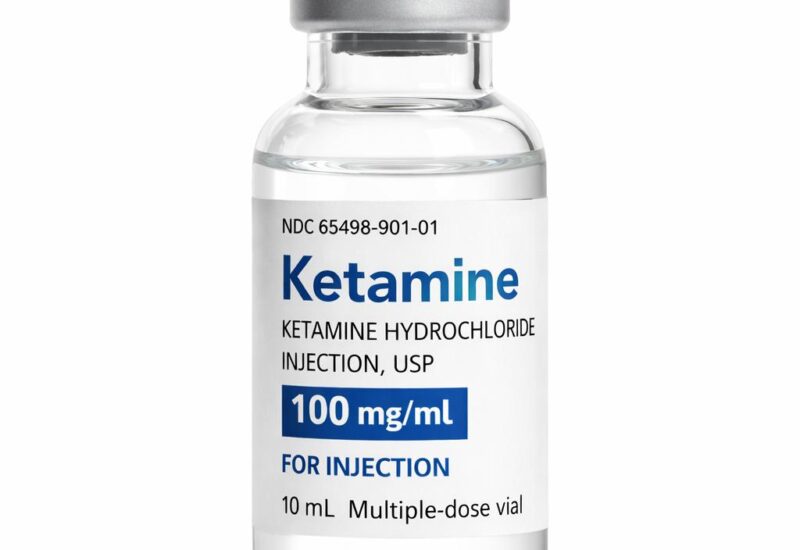
Ketamine was originally developed as an anesthetic. Researchers later investigated its effects on depression, pain signalling, and other neurological processes.
Unlike Desoxyn, which primarily increases dopamine and norepinephrine activity, ketamine interacts with NMDA receptors involved in glutamate signalling.
Glutamate is an important neurotransmitter that supports communication between nerve cells, learning, memory, and synaptic plasticity.
Research into ketamine has identified potential applications in:
- Anaesthesia and procedural medicine.
- Certain supervised treatment approaches for depression.
- Selected pain-management research.
- Understanding glutamate-related neurological processes.
Esketamine, a form of ketamine, is approved in the United States for specific adult depression indications. It must be administered under an appropriate healthcare supervision programme.
The evidence for one ketamine formulation should not automatically be applied to another.
Ketamine Cream: What Is Its Purpose?
Ketamine cream is a topical preparation containing ketamine. It has been investigated and sometimes compounded for selected pain-management situations.
The proposed approach is to apply the preparation to an affected skin area, with the aim of influencing local pain-related signalling.
How might topical ketamine work?
Ketamine blocks NMDA receptors. These receptors contribute to processes involved in pain transmission and central sensitisation, where the nervous system becomes increasingly responsive to painful stimulation.
This mechanism has encouraged researchers to investigate whether topical ketamine could have a role in certain pain conditions.
However, the proposed mechanism does not establish clinical effectiveness. Research has not consistently shown that topical ketamine performs better than placebo for common neuropathic pain conditions.
What conditions have been investigated?
Compounded topical ketamine has been studied in connection with:
- Neuropathic pain.
- Complex regional pain syndrome.
- Painful diabetic neuropathy.
- Certain persistent pain conditions.
The evidence remains limited and inconsistent. Ketamine cream is not an FDA-approved general pain treatment or an established treatment for depression.
Is ketamine cream beneficial for everyone?
No. Its effects depend on the preparation, individual circumstances, and the condition being treated. Skin absorption can vary, and systemic exposure is possible.
A topical preparation should only be considered under appropriate medical supervision. Laboratory-grade ketamine must never be applied to the skin or used as a substitute for a prescribed medicine.
The National Academies’ review found limited evidence supporting compounded topical pain creams overall. Read the assessment.
Desoxyn vs. Ketamine: Understanding the Difference
| Feature | Desoxyn | Ketamine |
|---|---|---|
| Drug category | CNS stimulant | Dissociative anaesthetic |
| Main pharmacological activity | Dopamine and norepinephrine signalling | NMDA receptor antagonism |
| Recognised medical applications | ADHD | Anaesthesia and specific supervised clinical applications |
| Depression treatment | Not an approved depression treatment | Esketamine is approved for specified adult indications |
| Controlled status in the USA | Schedule II | Schedule III under federal law |
These medicines should not be considered interchangeable. Their effects, medical uses, prescribing requirements, and risks are different.
KetamineResearchLabs: Product Information and Research Awareness
KetamineResearchLabs focuses on ketamine-related information and product-category education through its website and labsstore.
When evaluating laboratory products, customers and researchers should look for transparent documentation, including:
- Product identity and chemical description.
- Available analytical testing and batch documentation.
- Purity information and testing methods.
- Storage and handling requirements.
- Applicable regulatory and intended-use information.
Good documentation supports product transparency, but it does not independently establish that a material is safe or effective for human treatment.
Prescription medicines such as Desoxyn must be obtained through lawful, licensed healthcare channels. Laboratory or research materials must not be advertised or used as substitutes for approved medicines.
Frequently Asked Questions About Desoxyn
Is Desoxyn the same as ketamine?
No. Desoxyn contains methamphetamine hydrochloride and acts as a CNS stimulant. Ketamine is an anaesthetic that acts primarily through NMDA receptor pathways.
Is Desoxyn used for ADHD?
Yes. Desoxyn is FDA-approved for ADHD in pediatric patients aged six years and older. Its use requires careful medical assessment and monitoring.
Is Desoxyn approved for obesity?
No. The current FDA-approved indication is ADHD. The former obesity indication was removed from the labeling in 2019.
Can ketamine cream treat ADHD?
No established clinical evidence supports ketamine cream as an ADHD treatment. It should not be substituted for prescribed ADHD care.
Can Desoxyn and ketamine be used together?
Combining these medications requires careful professional assessment. Their cardiovascular and neurological effects may create additional risks. Patients should never combine them without guidance from their prescribing clinician.
Stay Informed With KetamineResearchLabs
Understanding medicines such as Desoxyn and ketamine requires accurate information about their ingredients, mechanisms, clinical applications, and safety considerations.
At KETAMINERESEARCHLABS.COM, we encourage responsible research awareness and transparent product information. Explore our website and labsstore to learn about our ketamine-related product categories and available documentation. Product availability and intended use must comply with applicable laws and healthcare requirements.
Email: [email protected]
Website: KETAMINERESEARCHLABS.COM
Stay informed for your health and well-being!
Make informed decisions, prioritise safety, and consult qualified healthcare professionals before considering any prescription medication.