codeine phosphate
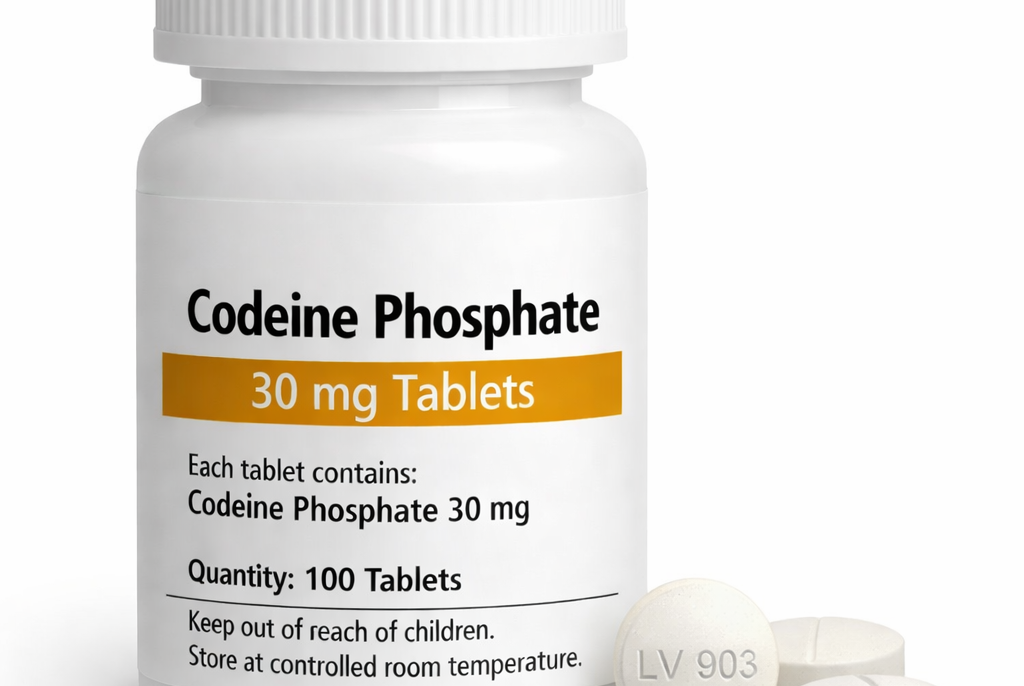
Codeine Phosphate: A Complete Guide to Pain Relief, Medication Safety, and Ketamine Research
What Should You Know About Codeine Phosphate?
Codeine phosphate is a prescription opioid medicine that healthcare professionals may use to manage certain types of pain. It affects the central nervous system, changing how the brain interprets pain signals. Although it can provide relief in appropriate clinical situations, it also carries important risks that patients should understand.
Pain treatment has developed considerably as scientists investigate how different substances interact with the nervous system. Codeine works through opioid receptors, while ketamine primarily influences NMDA receptors. These different mechanisms have made both compounds relevant to pharmaceutical science, although their medical applications are not interchangeable.
This guide examines codeine phosphate, its pharmacological properties, prescription considerations, and the scientific importance of ketamine, including research into topical ketamine cream.
Inside the Medicine: How Does Codeine Work?
Codeine belongs to a group of medicines known as opioids. It produces its pain-relieving effects mainly through opioid receptor activity in the brain and spinal cord.
One particularly important feature is its relationship with morphine.
After a person takes codeine, the liver converts some of it into morphine through an enzyme known as CYP2D6. This process contributes to the medicine’s analgesic effects.
However, CYP2D6 activity differs between individuals. Some people metabolise codeine slowly, while others convert it rapidly. Rapid metabolism can result in unexpectedly high morphine exposure and increase the risk of dangerous adverse reactions.
This is one reason healthcare professionals assess individual circumstances before prescribing codeine. LEARN MORE BY CLICKING HERE..
When Is Codeine Phosphate Prescribed?
Codeine may be considered for selected situations in which a clinician believes opioid treatment is appropriate.
Its potential uses include:
Short-term pain management: A prescriber may consider codeine for certain acute pain conditions when other suitable treatments have not provided sufficient relief.
Post-procedure discomfort: Depending on the procedure and the patient’s medical circumstances, codeine may form part of a supervised pain-management plan.
Certain cough preparations: Some formulations have historically contained codeine to suppress coughing. However, restrictions apply in many jurisdictions because of opioid-related safety concerns.
Codeine does not cure the underlying condition causing pain. Its role is to influence pain perception while healthcare professionals address the cause.
Dosage, Prescription Instructions, and Responsible Use
Codeine phosphate dosage cannot be determined safely from a general online article. Different formulations contain different strengths, and the appropriate prescription depends on factors such as age, health, other medications, and the condition being treated.
Patients should:
- Follow their prescription and pharmacist’s instructions.
- Avoid taking additional doses without professional advice.
- Never share their medication with another person.
- Avoid combining codeine with alcohol or sedating medicines unless specifically directed by a healthcare professional.
- Ask a pharmacist what to do if they miss a dose.
Combining opioids with benzodiazepines, sleeping tablets, alcohol, or other central nervous system depressants can dangerously slow breathing.
People who have taken codeine regularly should also seek medical advice before stopping it, because withdrawal symptoms may occur.
A Closer Look at Codeine’s Side Effects
Understanding possible adverse effects helps patients recognise when they need medical attention.
| Side effect | Explanation |
|---|---|
| Constipation | Opioids can slow movement through the digestive system |
| Nausea | Some patients experience stomach discomfort or vomiting |
| Dizziness | Changes in alertness can cause unsteadiness |
| Drowsiness | The medicine can reduce concentration and reaction speed |
| Respiratory depression | Breathing can become dangerously slow or shallow |
| Physical dependence | Repeated exposure can cause the body to adapt to the medicine |
<text weight=”semibold” color=”danger”>Emergency warning:</text> Unusual difficulty waking, severe sleepiness, or slow or shallow breathing may indicate an opioid overdose. Seek emergency medical assistance immediately.
Long-term or inappropriate use can also contribute to tolerance, dependence, and opioid use disorder. Patients should receive individual medical guidance rather than adjusting treatment themselves.
Why Are Scientists Interested in Ketamine?
Ketamine represents a different area of pharmaceutical research because it affects a different receptor system.
Its principal pharmacological action involves blocking NMDA receptors. These receptors respond to glutamate, a neurotransmitter that plays an important role in communication between nerve cells.
NMDA receptor activity contributes to:
- Processing and transmitting pain signals.
- Synaptic plasticity.
- Learning and memory.
- Central nervous system sensitisation.
- Communication between different neural pathways.
This activity has made ketamine valuable to researchers investigating how the brain and nervous system respond to pain and other neurological processes.
Ketamine’s established and investigational medical importance
Anaesthesia: Ketamine has an established role as a dissociative anaesthetic. Qualified medical professionals use it in selected procedures and clinical settings.
Pain-related investigation: Researchers examine its influence on central sensitisation and other mechanisms involved in acute and persistent pain. Clinical use for pain requires careful consideration of potential benefits and risks.
Psychiatric treatment research: Ketamine has attracted interest in depression research. Esketamine, a related medicine, has specific FDA-approved indications for certain adults with depression and requires supervised administration.
These applications demonstrate ketamine’s importance in medicine. They do not establish every ketamine formulation as safe or effective for every condition.
Ketamine Cream: What Does Research Actually Tell Us?
Topical ketamine cream is a compounded formulation intended for application to the skin. Researchers have investigated it because of ketamine’s interaction with NMDA receptors and their involvement in pain processing.
To understand the scientific interest, consider neuropathic pain.
Neuropathic pain occurs when disease or injury affects the nerves or nervous system. It may produce burning, tingling, shooting sensations, or discomfort from ordinary touch. READ MORE BY CLICKING HERE
Why investigate a topical formulation?
A topical preparation provides a different route of administration from an injection or nasal medicine. Researchers have explored whether compounded ketamine applied to the skin might influence certain localised pain symptoms.
However, the effect of a topical formulation depends on several factors, including:
- The formulation’s ingredients.
- The concentration of the active substance.
- The condition of the skin.
- The application area.
- The amount of systemic absorption.
Applying a medicine to the skin does not automatically mean that it stays in one location or has no effects elsewhere in the body.
What are the possible research areas?
Studies have examined topical ketamine in relation to selected neuropathic pain conditions and complex regional pain syndrome.
The scientific interest comes from ketamine’s pharmacological mechanism, but clinical findings remain limited and inconsistent. Researchers have not established compounded topical ketamine as a reliable general treatment for neuropathic pain.
It is also not FDA-approved as a finished topical medicine.
Patients should discuss any proposed compounded formulation with a qualified healthcare professional. Research-grade ketamine must not be used to prepare personal creams or applied directly to the skin.
Codeine and Ketamine: Two Different Pharmacological Pathways
Although both substances are discussed in pain-related medicine, their mechanisms are different.
| Comparison | Codeine phosphate | Ketamine |
|---|---|---|
| Drug family | Opioid | Dissociative anaesthetic |
| Main receptor activity | Opioid receptors | NMDA receptors |
| Medical application | Selected prescription pain treatment | Anaesthesia and selected supervised treatments |
| Scientific interest | Opioid pharmacology | Neuroscience and pain signalling |
| Major safety concerns | Dependence and respiratory depression | Dissociation, sedation and cardiovascular effects |
This distinction is important when evaluating medical information. Ketamine is not a direct substitute for codeine, and neither should be used without appropriate medical oversight.
KetamineResearchLabs and Its Research-Focused Product Information
At KetamineResearchLabs, we recognise the importance of scientific education, product identification, and transparent documentation.
Our website, KETAMINERESEARCHLABS.COM, provides access to our LabsStore and information about available research-focused product categories.
For researchers evaluating pharmaceutical materials, useful product information may include:
- Chemical identity and composition.
- Batch or lot identification.
- Available analytical specifications.
- Certificates of Analysis, where provided.
- Storage and handling information.
- Intended-use and regulatory statements.
We aim to make information about our ketamine-related product offerings accessible to audiences in the USA and internationally, subject to applicable laws and product availability.
Product quality should be assessed through appropriate documentation and verification. A Certificate of Analysis can provide batch-specific analytical information, but it does not demonstrate that a research material is approved for human treatment.
Our LabsStore is a place to review available product information. Research materials must remain within their authorised purposes and should never be marketed or treated as substitutes for approved prescription medicines.
For individuals considering ketamine-based medical treatment, qualified healthcare professionals can explain authorised formulations, clinical suitability, and supervision requirements.
Common Questions About Codeine Phosphate and Ketamine
Is codeine phosphate a strong painkiller?
Codeine is an opioid used for selected pain conditions. Its effects vary between individuals because metabolism and sensitivity differ.
Can codeine phosphate cause breathing problems?
Yes. Codeine can suppress breathing, particularly when taken in excessive amounts or combined with alcohol or other sedating substances.
Does ketamine work like codeine?
No. Codeine primarily activates opioid receptors, whereas ketamine primarily blocks NMDA receptors.
What makes ketamine cream different from ketamine injections?
Ketamine cream is applied to the skin, while injections deliver the medicine through a different route. Their absorption, clinical evidence, and regulatory status differ.
Is topical ketamine proven to treat all nerve pain?
No. Current evidence remains limited and inconsistent. Compounded topical ketamine is not an established general treatment for neuropathic pain.
Where can I explore KetamineResearchLabs products?
Visit KETAMINERESEARCHLABS.COM to review the LabsStore and available research-focused product descriptions.
Final Thoughts: Understanding Pharmaceutical Research and Responsible Product Information
Codeine phosphate remains an important prescription opioid for selected pain conditions, but its risks require careful prescribing and monitoring.
Ketamine contributes a different perspective to medical science through its effects on NMDA receptors, its established anaesthetic applications, and ongoing investigations into pain and mental-health treatment. Topical ketamine cream also remains an area of research rather than a proven general solution for pain.
At KetamineResearchLabs, we encourage informed scientific inquiry, transparent product information, and responsible research practices.
Explore our website and LabsStore for current product descriptions and research information.
Website: KETAMINERESEARCHLABS.COM
Email: [email protected]
Stay informed for your health and well-being! SHOP NOW.
Always follow applicable regulations and consult qualified healthcare professionals before making medical treatment decisions.